2026-10-24 ·
Preparing Your AC For Hurricane Season In Tampa Bay
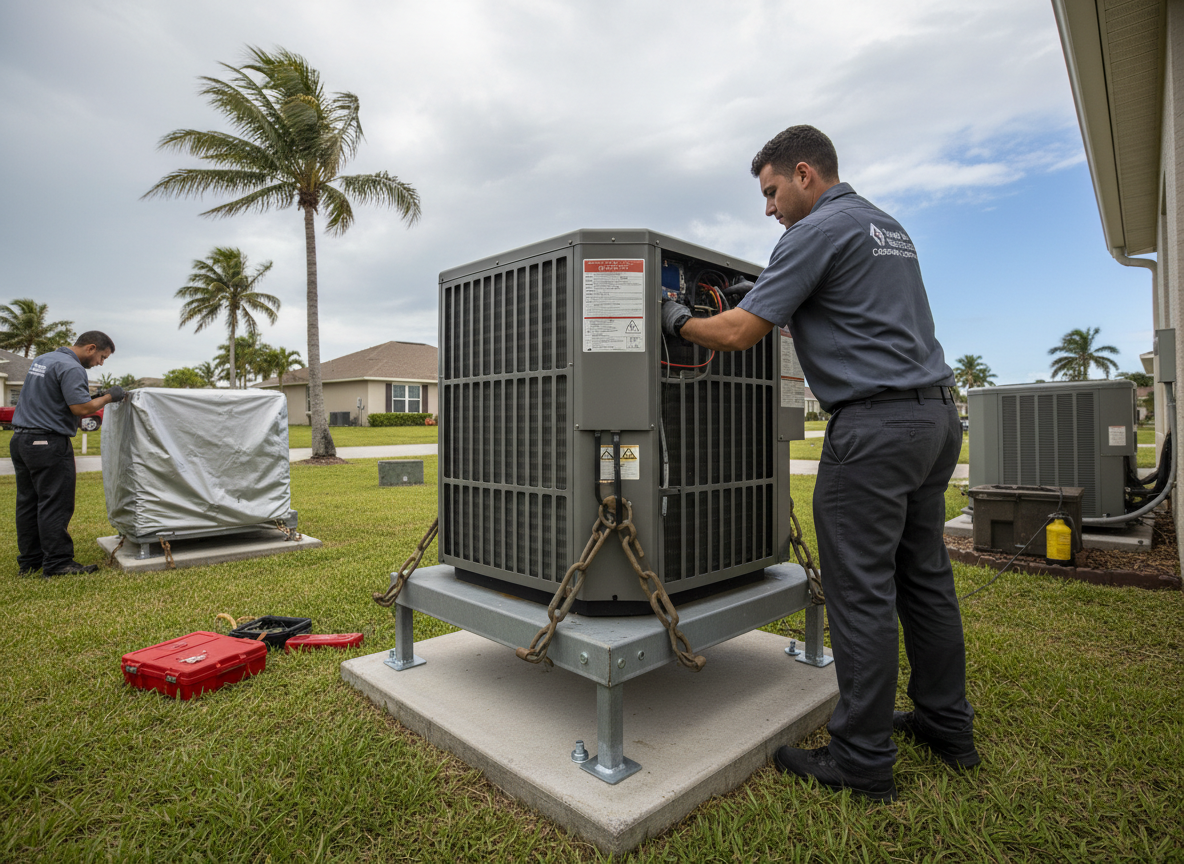
Start preparations by scheduling an AC inspection 4-6 weeks before June 1 so technicians can secure mounting hardware and clear drain lines before storms arrive. Tampa Bay's combination of gusty winds and sudden downpours can dislodge rooftop or ground units in older neighborhoods such as Carrollwood and Temple Terrace where many homes date from the 1970s and 1980s. Checking refrigerant lines, electrical disconnects, and condensate pans now prevents water intrusion and debris damage that often occurs once winds exceed 40 mph. Owners in St. Petersburg and Clearwater also benefit from verifying that their outdoor condensers sit on raised pads above typical flood levels found near the bay.
Securing Outdoor Units in High-Wind Zones
Tampa Bay homes in exposed areas like Westchase and Town 'n' Country often place condensers on rooftops or low pads where hurricane-force winds can topple them or send debris into fan blades. Use manufacturer-approved straps rated for 150 mph winds and add vibration isolators to reduce stress on copper lines. Check that the disconnect box remains watertight and that the concrete pad shows no cracks that could allow shifting during heavy rain. Technicians familiar with local codes routinely add guy wires on taller installations common in Lutz and Wesley Chapel where open lots increase wind exposure. These steps keep the unit stable without voiding warranties when performed by experienced crews.
Handling Drainage and Flooding Risks
Heavy rainfall during tropical storms quickly overwhelms clogged condensate lines in older Tampa Bay housing stock, leading to indoor water damage and mold in attics. Clear the primary and secondary drains, then test the safety float switch before each season. In low-lying sections of Riverview and Brandon, raising the condensate pump or adding a longer discharge line prevents backup when streets flood. Homes near the Hillsborough River or in parts of Seminole benefit from checking that the outdoor unit sits at least 12 inches above grade to avoid standing water that corrodes electrical components. Regular attention to these details reduces emergency calls once storms pass.
Preparing for Power Outages and Post-Storm Recovery
Extended outages after hurricanes leave AC systems vulnerable to sudden restarts that can damage compressors when power returns. Install a surge protector rated for HVAC loads and confirm the thermostat has a time-delay feature. After the storm, inspect for standing water around the unit and remove any debris before restoring power. Residents in Palm Harbor and Dunedin often schedule follow-up visits through hvac maintenance to verify refrigerant pressures and electrical connections remain intact. This sequence prevents short cycling and extends equipment life in the humid conditions that follow tropical weather.
Scheduling Pre-Season Service in Tampa Bay
Book service calls in April or May when demand is lower and parts availability is higher across the Tampa Bay area. A full ac tune up includes checking capacitor health, cleaning coils, and confirming the system can handle the 90-plus-degree days that arrive after storms. Linking this visit to humidity control discussions helps owners in Carrollwood understand how proper drainage prevents excess moisture once windows stay closed during extended outages. The same appointment can reference related guidance on indoor humidity sources common in local construction. Completing these tasks before June 1 keeps systems reliable through November.